
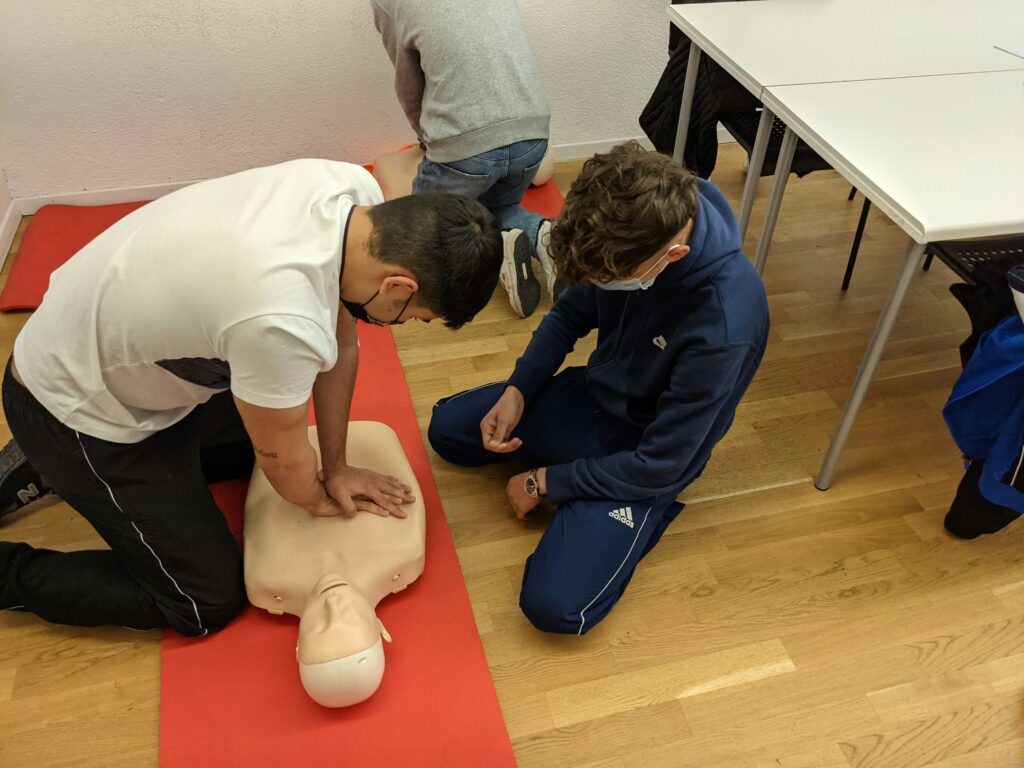
Every 40 seconds, someone in the United States has a heart attack. In many of those cases, the difference between life and death isn’t a hospital — it’s the person standing closest.
That person could be you.
What Is CPR?
CPR stands for Cardiopulmonary Resuscitation. It’s an emergency procedure used when someone’s heart has stopped beating or they’ve stopped breathing normally. By manually compressing the chest and, in some cases, giving rescue breaths, CPR keeps oxygenated blood flowing to the brain and vital organs until professional medical help arrives.
Without CPR, brain damage can begin within 4 to 6 minutes of cardiac arrest. With CPR started immediately, a person’s chance of survival can double or even triple.
Who Can Perform CPR?
Anyone can. You don’t need to be a doctor, nurse, or paramedic. CPR training courses — including those offered by the American Red Cross — are widely available, often free or low-cost, and can be completed in just a few hours.
At ProjectMedMinds, our founder Aarshiya Singh holds CPR/AED certification for Professional Rescuers — but we firmly believe basic CPR knowledge shouldn’t be limited to professionals. It belongs in every household, every school, and every community.
The Basic Steps of Hands-Only CPR
If you witness someone collapse and they are unresponsive and not breathing normally, follow these steps:
- Call 911 immediately — or ask someone nearby to call while you begin CPR
- Place the heel of your hand on the center of the person’s chest (on the lower half of the breastbone)
- Push hard and fast — compress the chest at least 2 inches deep, at a rate of 100–120 compressions per minute (roughly the beat of “Stayin’ Alive” by the Bee Gees)
- Don’t stop — continue until emergency services arrive or an AED becomes available
Note: These steps are for general awareness only. We strongly encourage taking a certified CPR course to practice hands-on technique.
What Is an AED?
An AED (Automated External Defibrillator) is a portable device that can analyze heart rhythm and deliver an electric shock to restore a normal heartbeat. AEDs are found in many public places — schools, airports, gyms, and community centers. They are designed to be used by non-medical people and include voice instructions that guide you through every step.
Why This Matters to ProjectMedMinds
Health literacy isn’t just about understanding your doctor’s advice — it’s about being prepared when seconds count. One of our core goals is to make lifesaving knowledge accessible to everyone in our community, regardless of age, background, or experience.
If you’re interested in learning CPR or finding a certification course near you, the American Red Cross offers in-person and online options across Illinois.
Have a health topic you’d like us to cover? Contact us — we’d love to hear from you.
This article is for educational purposes only and is not a substitute for professional medical advice, diagnosis, or treatment. Always seek the guidance of a qualified healthcare provider with any questions you may have regarding a medical condition.